
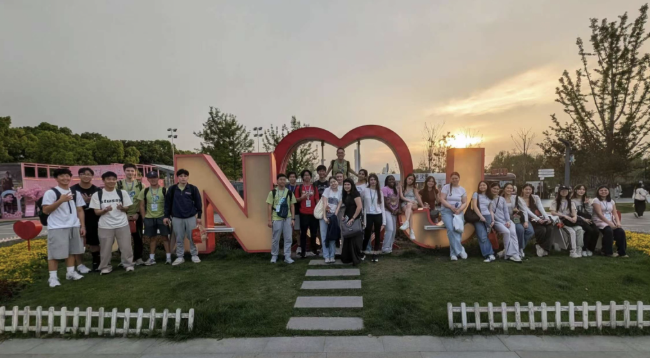
Over April break, students and teachers in the NVD and NVOT Chinese curriculum traveled to China, where they visited the cities of Nanjing, Huai’an, and Shanghai to experience Chinese language and culture outside the classroom. The trip included school visits in Nanjing, opportunities to interact with Chinese students and teachers, and firsthand experiences with local food, traditions and daily life.
For many students, the trip brought what they had learned in the classroom to real life. Instead of only practicing Chinese through lessons and assignments, they were able to use the language while traveling, talking with people and experiencing the culture for themselves.
Wenjie Liu, the Chinese teacher of NVD and NVOT, explained that the purpose of the trip was to help students see China beyond textbooks, lessons, and classroom discussions.
“The goal of the trip was to give students a firsthand understanding of China and the Chinese language,” Liu said. “Many of them have studied Chinese for four years, and I felt they deserved the opportunity to finally experience the culture they had been learning about in real life.”
One of the most memorable parts of the trip was the school visit in Nanjing, where students had the opportunity to meet and interact with Chinese students. During the visit, students were able to observe the school environment, talk with students, and compare parts of their daily lives.
Junior Rebecca Angliongto said the school visit gave her a clearer view of student life in Nanjing.
“During the school visits in Nanjing, what stood out to me was the proficiency of English among the students, and their eagerness to want to connect to us American students,” Angliongto reflected.
The visit also gave students a chance to notice both similarities and differences between school life in China and America. Senior Emily Herger said she was surprised by how much students in both countries had in common, even though their school systems were different.
“Something that stood out the most about the school visits in Nanjing were the similarities and differences in both of our lives,” Herger said. “While the schools are much larger there and the students stay in school longer they also have similar interests and goals to us.”
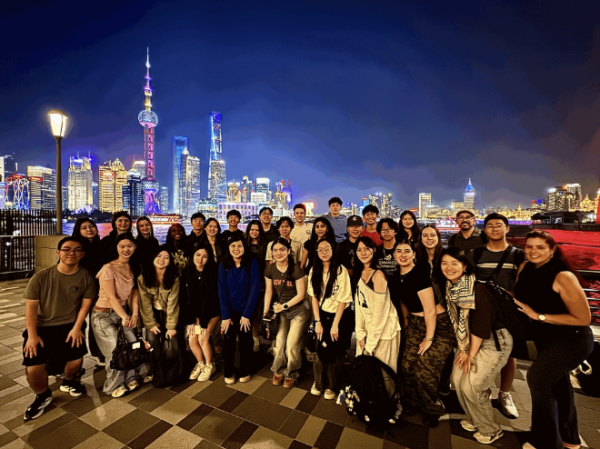
According to Herger, one of the biggest differences she noticed was the amount of time Chinese students dedicate to school. She said she was especially surprised by the long school days and the preparation for the gaokao, China’s college entrance exam.
“I was most shocked by the level of dedication students have towards their education,” Herger said. “Most high school students in China are at school for very long periods of time, sometimes as long as 14 hours. They also have mandatory study breaks to study for gaokao, a college placement test seniors take to determine what university they will go to.”
For Liu, watching students from both countries interact showed how quickly they could connect despite differences in language and culture.
“It was truly touching to see students from China and the United States discover so many things in common,” Liu said. “They shared snacks, talked about their favorite singers and sports, and some even compared their math homework.”
The trip also helped students understand how learning a language can be useful outside of school. Beyond classroom practice, students saw how Chinese could help them navigate new places and interact with new people while traveling.
Angliongto said the trip changed the way she viewed China because she was able to experience it directly instead of only hearing about it through outside sources.
“The trip enabled me to have the opportunity to experience China myself,” Angliongto said. “Instead of viewing China solely through media representation, I was able to engage with local residents and participate in their cultural customs to learn what life is really like over there.”
Herger agrees, saying that the trip showed her the value of learning a language as a way to communicate with people she otherwise may not have been able to connect with.
“The trip changed my mindset about Chinese culture and language because I saw just how useful and meaningful learning a language can truly be,” Herger said. “To be able to connect with complete strangers through a language was rewarding to me, and I’ll always cherish those moments when looking back on this trip.”
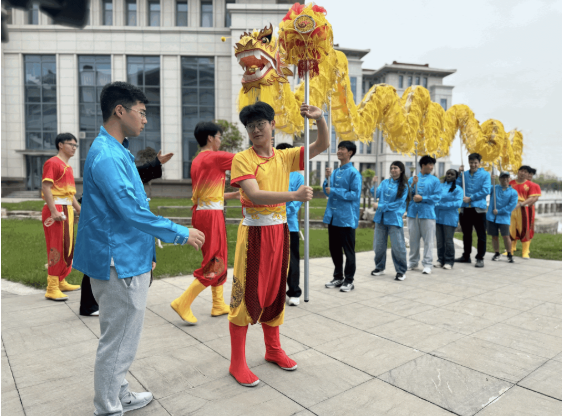
Food was another major part of the experience. While students can learn about Chinese food in class, Liu said tasting it in China gave students a much deeper understanding of the country’s culture and regional diversity.
“Food was definitely one of those moments,” Liu said. “No matter how much we talk about Chinese food in class, students need to visit China to truly taste authentic dishes, from famous Huaiyang cuisine to everyday school lunches in cafeterias.”
Overall, the trip gave students a chance to become more independent and confident with their language skills. Angliongto said that when students were allowed to explore on their own, they applied what they had learned in class in real-life scenarios.
“During the trip, we had to bridge the lessons from the classroom to real-world situations,” Angliongto said. “When our teachers allowed us to explore independently, we had to rely on what we learned in order to navigate.”
For Herger, one of the biggest takeaways was understanding culture by actually living in it, even for a short time.
“Everyone typically learns a language in high school, but not everyone gets to become immersed in that culture, seeing how people live their lives every day and what we can learn from them,” Herger said.
Even though the trip only included three cities, Liu said she hopes students will continue learning about China with curiosity after returning home.
“This trip added many firsthand experiences to our Chinese class,” Liu said. “Now, whenever we discuss language, culture, food, or daily life, students have real examples and experiences to connect with.”