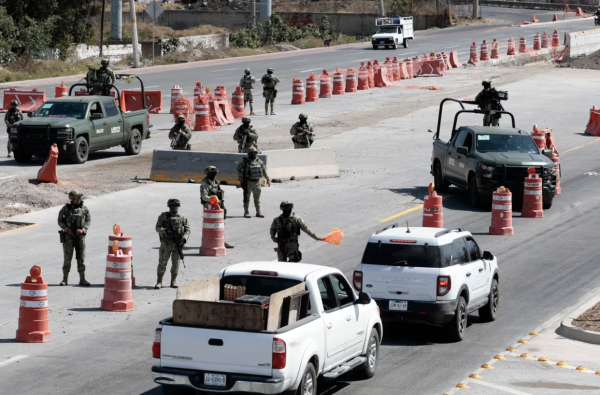
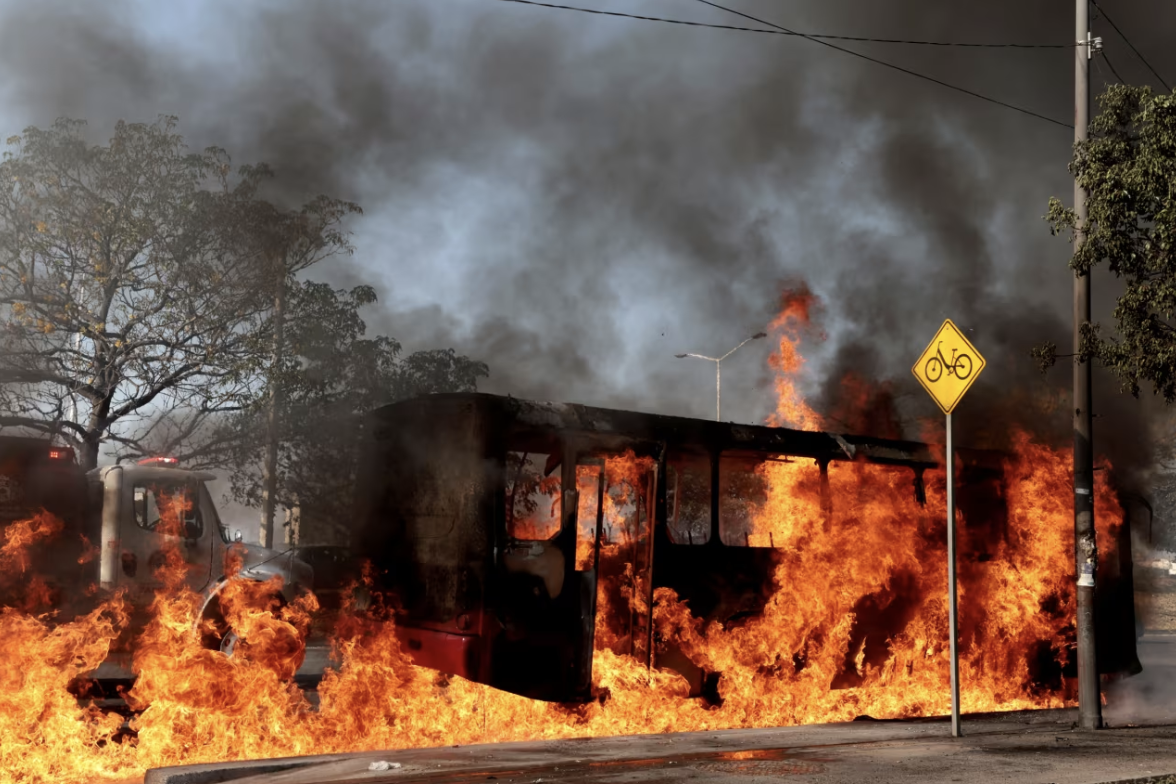
Since February 22, 2026, smoke continues to fill the Mexican skies as buses, shops, cars, and roads were set ablaze in what the Mexican government called a coordinated response by Mexican cartels. With a bounty of $15 Million USD over his head, “El Mencho,” leader of the Jalisco New Generation Cartel (CJNG), was killed in a shoot-out with the Mexican army.
According to USA Today, the CJNG retaliated immediately and exerted widespread influence. They blockaded roads across 20 Mexican states, burned vehicles, and attacked storefronts. For its travelers and citizens, the U.S. State Department issued several shelter-in-place advisories across several regions, primarily targeting Puerto Vallarta, a popular Pacific resort destination. International airlines followed suit and cancelled all flights to Guadalajara and Puerto Vallarta. Global concerns continue to arise with retaliation of cartels in Mexico, as well as with the upcoming 2026 World Cup, with many matches being hosted in Guadalajara.
On Monday, March 2, “El Mencho”/Nemesio Oseguera Cervantes was buried in a gold casket by his family members, according to the BBC. However, experts warn that the death of a cartel leader does not signal the end of cartel violence or functions. The New York Times’ Maria Abi-Habib wrote that, “El Mencho’s death alone is not the end of the group.”
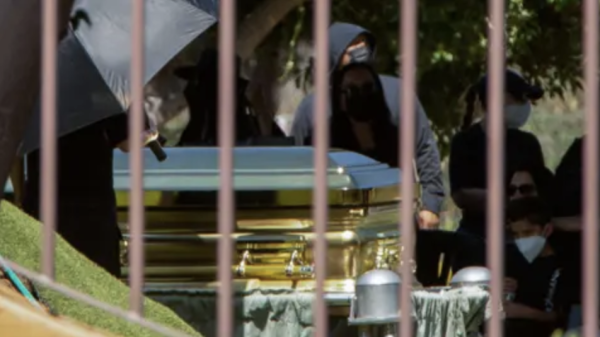
(Photo courtesy of BBC)
This “Mexican Drug War” and cartel violence can be traced back decades in history. During the 71-year rule of the Institutional Revolutionary Party (PRI), tacit agreements were common between the Mexican government and cartels. These tacit agreements allowed drug traffickers to continue operations with few conditions in specific regions.
In 1985, the killing of a U.S. Drug Enforcement Administration agent — Entrique “Kiki” Camerena — sparked aggressive responses from the United States and Mexico. Leading to the capture of drug lord Miguel Angel Felix Gallardo, a founder and leader of the Guadalajara Cartel.
His capture was the first time that a highly ranked cartel leader was arrested, becoming the blueprint for the American “Kingpin” strategy. Targeting the top leader caused the Guadalajara Cartel to splinter into several factions, all “vying for market share, territory and survival, organised and equipped themselves for competition” (RUSI.org).
The PRI lost power in the 2000 election, when its candidate, Felipe Calderón, won. In 2006, he launched a military crackdown on the drug cartels and trafficking organizations, deploying approximately 6,500 soldiers to Michoacán, where 14 cartels competed for control.
Conflicts escalated two years later with “Joint Operation Nuevo León Tamaulipas,” which targeted the Gulf Cartel and Los Zetas. Following the operation, several assassinations of police officers and military officials occurred as a result of cartel retaliation.
Since then, high-profile cartel leaders were captured or killed, the most famous of which included Sinaloa Cartel leader Joaquin Guzman, “El Chapo.” The original intent of the Kingpin strategy continued to fall short. As leaders fall, their groups fracture and become even more violent.
Today, cartels do not limit themselves to drug trafficking. According to RUSI, several have expanded their reach into Mexican fisheries, human trafficking, and other markets. They’ve moved away from being single criminal groups to a “conglomerate,” as described by NYT writer Maria Abi-Habib.
This expansion of cartel power is seen with the CJNG. Professor Carlos Pérez Ricart called their tactics, “calculated and instrumental. It was narco-terrorism.” Each faction and new generations adopt extreme tactics and violence.
Recent unrest after the killing of “El Mencho” raised concerns about the 2026 World Cup, as it will be hosted in North America. Writers in the New York Post warned that “Mexico needs to be at peace for the World Cup to take place” and that they need to “pacify the country very quickly — in a week, in about 10 or 15 days — because of the World Cup.”
Further adding to unrest and tension, Reuters reported that false images are circulating online about the state of Guadalajara, such as the plane on fire at their airport. According to USA Today, officials suspect that these fake images are “coordinated propaganda by organized crime”.
As for U.S. responses, President Donald Trump considered taking retaliatory measures. This remark continued to fuel debates over immigration and stricter border security.
The burial of “El Mencho” marks the end of his reign over the Jalisco New Generation Cartel. History continues to predict that Mexican cartel violence doesn’t end with the fall of a “kingpin”. The fall of a leader signals new beginnings and a power vacuum for factions to compete over, continuing the conflict that we call the Mexican Drug Wars.