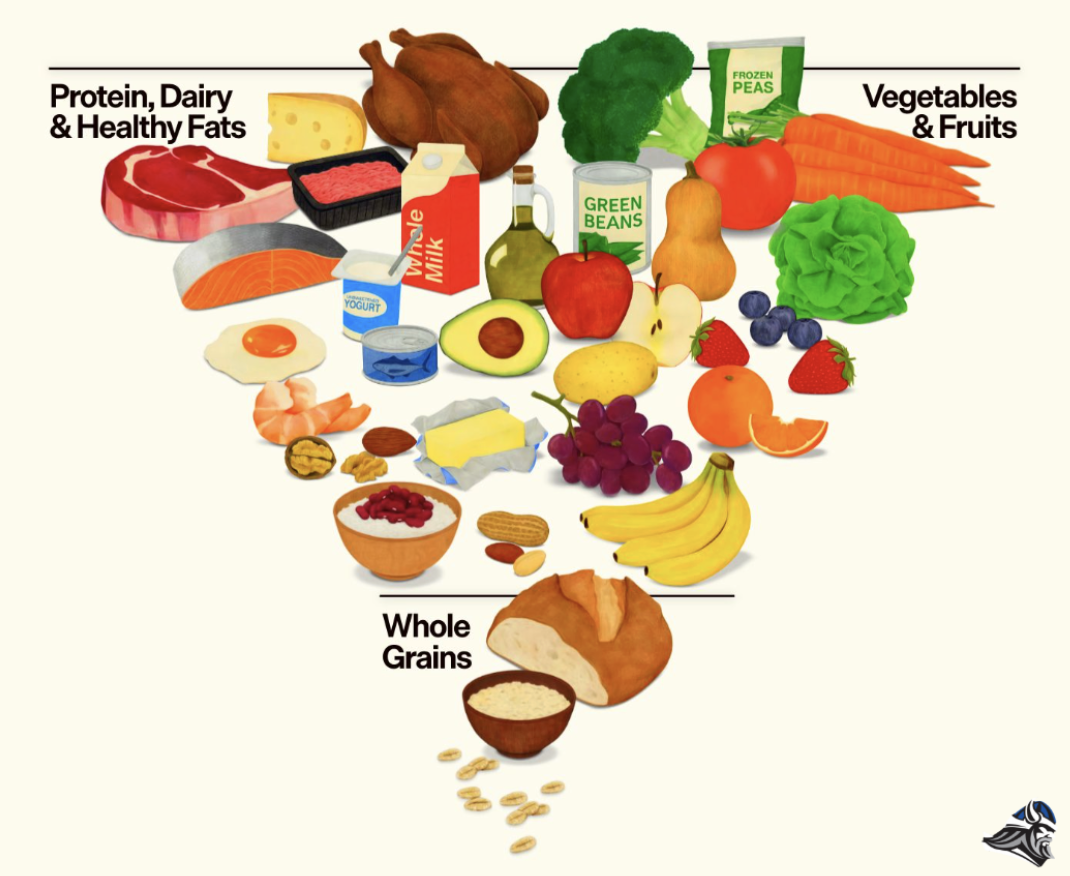
On January 7, 2026, U.S. Health Secretary Robert F. Kennedy Jr. released a new inverted food pyramid with updated dietary guidelines. This new model of nutritional recommendations is part of the “Make America Healthy Again” (MAHA) initiative, a health agenda under the Trump administration.
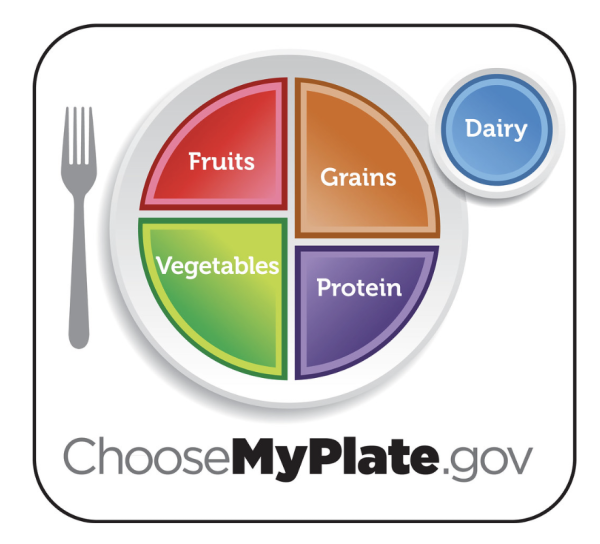
The U.S. Department of Agriculture Food Guides have gone through many changes throughout the years, as new research about nutrition is discovered. For the last ten years, the traditional “MyPlate” has been used as a guide on how much of each food group one should be consuming.
According to Harvard.edu, in 2011 “the USDA’s MyPlate was released, replacing two decades of pyramids with a simpler approach representing an actual meal.”
Now, 15 years later, this model has undergone new developments and returned back to a pyramid form. However, this pyramid has many new adaptations, as now it is inverted, differing from pyramids seen in the past. RFK Jr’s new pyramid reflects a major shift from the previous MyPlate model, emphasizing protein, healthy fats and full-fat dairy at the top, while placing grains and sugars at the bottom.
Mary Walrath-Holdridge of USA Today explains how the new model is “championing protein and healthy fats while minimizing grains,” and “the new nutrition recommendations, announced Jan. 7, are a departure from past government guidance. In fact, the accompanying food pyramid visual is a near complete inverse of what it once was, both visually and in terms of content,” Walrath-Holdridge said.
The goal of this new health model was to encourage Americans to eat less refined carbohydrates and added sugars.
According to Angelica Stabile from Fox News, “Kennedy’s main message to Americans was to ‘eat real food,’” Stabile said.
The reactions to this new approach to nutrition have been varied, with some experts praising it while others have their concerns.
In a segment on the Today Show, nutritionists shared their opinions on the new food model. Registered dietitian and chief impact officer for the Academy of Nutrition and Dietetics, Alison Steiber, details her thoughts on the new nutrition guide.
“We all believe that more fresh fruits and vegetables is a very positive thing. Eating protein sources from lean animal products or even legumes, nuts or whole grains is also totally great,” Steiber said.
Others feel like this new model is too radically different from years of advice and research done in the past. In an article from NPR, Christopher Gardner, a nutrition expert at Stanford University, shares his opinions.
“I’m very disappointed in the new pyramid that features red meat and saturated fat sources at the very top, as if that’s something to prioritize. It does go against decades and decades of evidence and research,” Gardner said.
Overall, eating healthy and having a balanced diet is very important to overall health, which is why government agencies such as the USDA continue to develop and create new models of nutrition.
In a White House briefing, Robert F. Kennedy Jr. introduced the new food pyramid and described it as “the most significant reset in federal nutrition policy in history. These guidelines replace corporate driven assumptions with common sense goals and gold standards in scientific integrity. These new guidelines will revolutionize our nation’s food culture and make America healthy again,” Kennedy Jr. said.