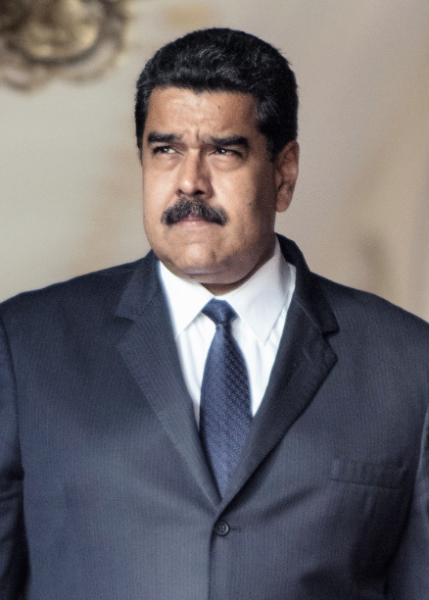
“Operation Absolute Resolve” was the title of the U.S. government operation that on Sat. Jan 10, led to the capture of Venezuelan leader Nicolás Maduro and his wife. Now just 30 miles away in Brooklyn’s Metropolitan Detention Center, Maduro remains in federal custody while facing charges from the Trump administration on narco-terrorism and drug trafficking. Maduro’s lawyers are expected to challenge the legality of his arrest, and on Mon., Jan 12, the legal battle began on whether the couple can be tried in the United States.
Until a permanent leader can be found, Trump has stated that the U.S. government will “run” Venezuela, “until such time as we can do a safe, proper and judicious transition,” President Trump said.
Secretary of State Marco Rubio made it clear that right now, the United States is not directly governing Venezuela but would “exert tremendous leverage” through an “oil quarantine.” Venezuela’s Vice President Delcy Rodriquez was sworn in as acting president on Monday.
With no one expecting it, Maduro and his wife were taken overnight with no American casualties. According to The New York Times, a clandestine team of C.I.A. officers have been in Venezuela since August.
“The team moved about Caracas, remaining undetected for months while it was in the country. The intelligence gathered about the Venezuelan leader’s daily movements — combined with a human source close to Mr. Maduro and a fleet of stealth drones flying secretly above — enabled the agency to map out minute details about his routines,” Julian E. Barnes, a writer for The New York Times, said.
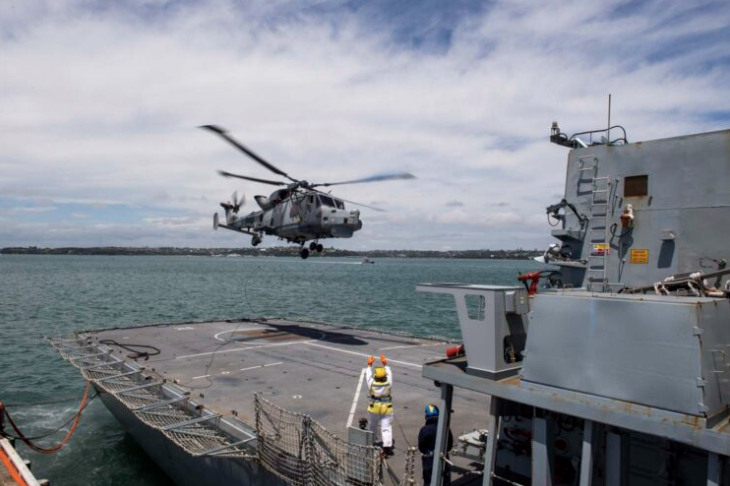
The result of this effort was one of the riskiest U.S. military operations since members of the Navy’s SEAL Team Six killed Osama Bin Laden in 2011. Overnight, the team captured Maduro and his wife, taking him to the U.S.S. Iwo Jima and to the U.S. Navy base at Guantánamo Bay.
The Trump administration is facing heat over its legal justification for carrying out the military operation. The administration never notified Congress of this military act, and many legal experts claim that Operation Absolute Resolve violated Article 2, Paragraph 4 of the United Nations Charter.
The charter states, “All Members shall refrain in their international relations from the threat or use of force against the territorial integrity or political independence of any state, or in any other manner inconsistent with the Purposes of the United Nations.”
However, a new classified legal opinion produced by the Justice Department now argues that the Trump Administration was “not limited by domestic law when approving the US operation … because of his constitutional authority as commander-in-chief and that he is not constrained by international law when it comes to carrying out law enforcement operations overseas,” according to CNN News.
Venezuela has a much more significant piece that the United States wants to surface: oil. Venezuela holds the world’s largest proven oil reserves and is the country with the biggest share of the world’s oil supply.
“We’re going to have our very large United States oil companies — the biggest anywhere in the world — go in, spend billions of dollars, fix the badly broken infrastructure, the oil infrastructure,” President Trump said at a news conference at Mar-a-Lago.
If the U.S. helps stabilize Venezuela and rebuild oil infrastructure, production could rise significantly over the next several years — potentially adding millions of barrels per day to global markets. This would increase global oil supply, which could lower prices and reduce the influence of traditional OPEC producers like Saudi Arabia and Russia in OPEC+.
According to the UN Refugee Agency, 7.9 million Venezuelans have left the country since 2014, making it one of the largest displacement crises in the world. After Maduro’s capture, these immigrants have taken to the streets in Colombia, South Florida, Peru, and more to celebrate Maduro’s removal from Venezuela’s government.
Helena Carpio, a Caracas based Venezuelan reporter for Times Magazine, wrote, “Many worry about the precedent that intervention sets. They are right to worry. But it was also dangerous to ignore Venezuelans for years as we documented torture, censorship, forced migration, extrajudicial killings, starvation, illegal mining, and crimes against humanity.”