
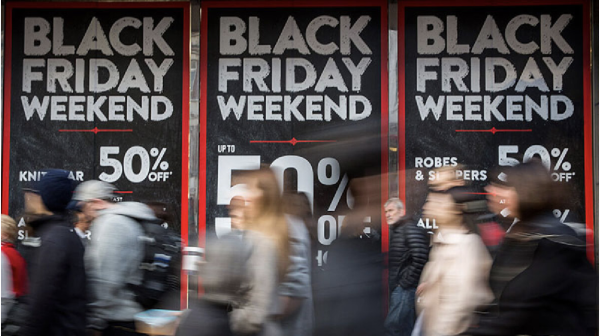
For decades, Black Friday has been known as the holiday of American shopping. Once associated with packed parking lots, lengthy checkout lines, and camping outside storefronts at midnight, the Friday after Thanksgiving used to be full of stress, shoppers, and national pride.
As online shopping transformed the retail landscape, the big question arises: is Black Friday still what it used to be, or is it slowly fading into the background?
Many say that while the tradition of Black Friday isn’t entirely dead, it is definitely evolving to keep pace with technological advancements.
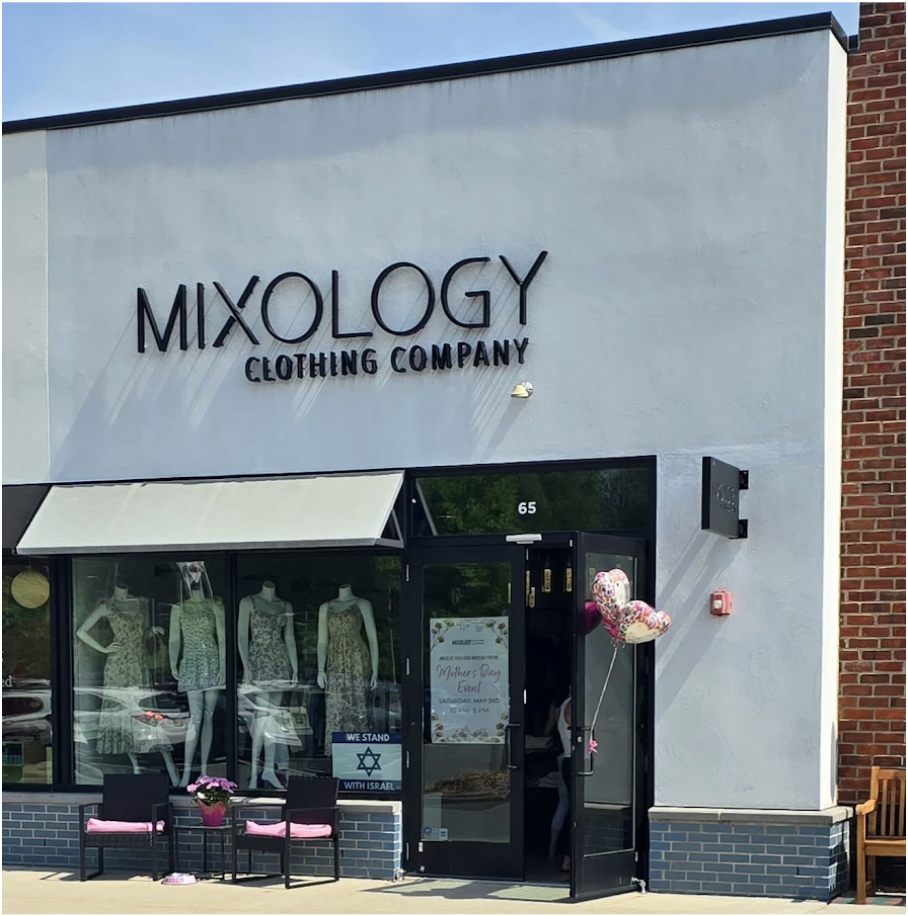
“I honestly expected there to be less people in-store on Black Friday,” Samaaya Agarwal said, who works at Mixology and Pumpkin & Bean.
However, when she went last year, there were many shoppers, which surprised her given Mixology’s year-round sales both online and in-store.
Even with the rise of shopping online, smaller businesses and boutiques continue to flood with loyal customers as Black Friday rolls around. However, the jumble and stress that once defined it are becoming indifferent to the everyday shopping experience. Instead, many shoppers opt for convenience instead of this experience.
“I think that online sales, discounts, and shopping have affected in-store shopping because sometimes online sales may be higher than in-store sales,” Agarwal said.
Ava Pavlos, an employee at Tapestrie in Westwood, reported similarly, highlighting a customer’s convenience over experience yet again.
“I think online shopping has affected the perception of the discounts that are given on Black Friday because online, there are more opportunities to save money than in-store (i.e., coupon stacking, free shipping codes, etc.),” Pavlos said.
This shift toward online deals is something retail workers are noticing, which, frankly, harms in-store sales.
“Many deals that you get in-store are simply not as good as what you can find online,” Pavlos said.
On a similar note, Agarwal explained that the thrill of finding good deals is fading.
“The sales aren’t as special as they used to be,” Agarwal said.
In fact, even shoppers noticed that Black Friday deals aren’t limited to the day after Thanksgiving anymore. Businesses now advertise discounts and sales as early as October.
“Traditionally, sales would start in-person either the night of Thanksgiving or early Friday morning. However, now, with them starting so early, it takes away the scarcity mindset that used to drive consumers,” Pavlos said.
This earlier timeline might help boost sales, but it diminishes overall excitement.
“There used to be like 80% off and things… but now many companies offer as little as 30% off or just free shipping, which does not fit with the Black Friday exclusivity,” Agarwal said.
Retailers have taken advantage of this shift to satisfy convenience, spreading deals weeks before and after Cyber Monday.
Pavlos analyzed a business’s approach to these sales and how it’s more beneficial for them.
“Businesses are trying to expand how long they are offering them to get more sales,” Pavlos said.
Nonetheless, retail workers see Black Friday as an evolving tradition rather than one that is dying out entirely.
Black Friday isn’t necessarily dead. It’s just more toned down, quieter, absent of large crowds and dramatic discounts, and reduced in excitement for urgency. Yet the spirit of shopping dedicated to the Friday after Thanksgiving lives on through shopping sites and “free shipping” instead of mall lines.
“People still honor the day with shopping. It’s just it’s not as exclusive as it once used to be,” Agarwal said.