
As summer approaches, more artists plan to go on tour, and festival lineups are being announced. Concerts are meant to bring people together through music, excitement, and the experience of listening to your favorite artists live. However, many fans feel that concert etiquette has disappeared over the years. According to The Post, concert etiquette is “generally regarded as the set of social norms fans should follow at shows,” like being respectful of others’ personal space, limiting use of phones, and just being considerate of others in general.
For many concertgoers, social media has altered the atmosphere of live events. Catalina Vega, a sophomore, who attends concerts “twice a year or so,” believes that concert etiquette has gotten worse. She explained that “social media brings so much hate, and it’s harder to control audiences.”
Her concert and festival experiences reflect these exact concerns.
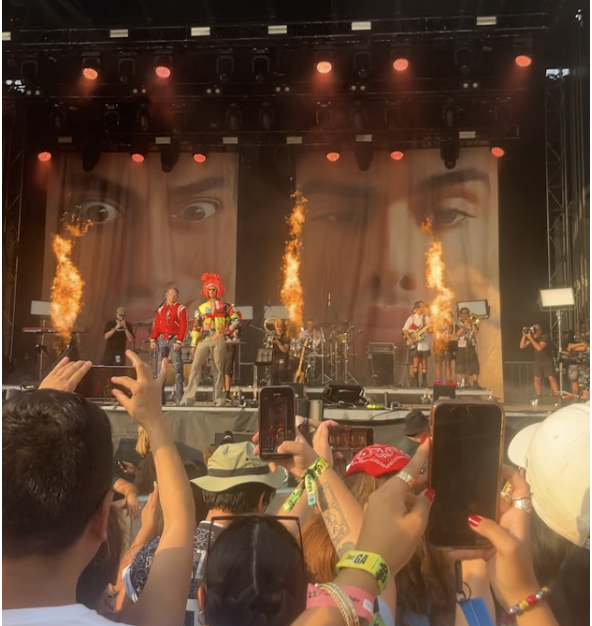
Vega remembered a frustrating moment when another fan constantly blocked her view at a music festival. While watching The Marias, there was a “random person next to me who was super tall and held their phone in front [of] me.”
This is a common and annoying occurrence, but most simply ignore it and try to enjoy the concert. What made this more infuriating was that “they realized I was too short to see and they moved to stand right in front of me,” Vega said.
Even with negative experiences, Vega still enjoyed The Marias at Lollapalooza.
Another frequent concertgoer, senior Sam Decosta, also believes that respect is a huge component of concert etiquette.
To him, good concert etiquette is “being respectful of shorter fans, giving people space, being polite, and not pushing when unnecessary,” Decosta said.
Like Vega, Decosta feels that concert etiquette continues to decline. He’s seen how younger audiences ignore the “unspoken standards” of concerts.
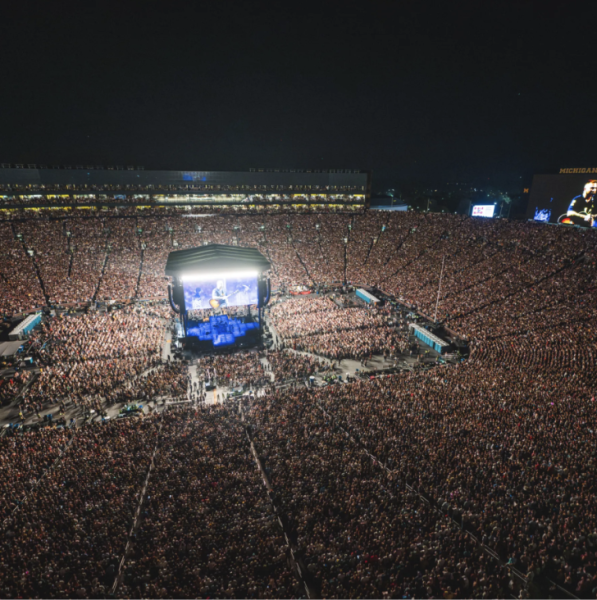
Despite occasional rude behavior, Decosta still makes the most of concerts, as seen in his experience at a Swedish House Mafia concert.
He recalled people “annoying him and shoving phones in my face, but I still had a great time,” Decosta said.
Another perspective comes from senior Sayan Mitra, who goes to concerts “now and again,” his favorite being Zach Bryan. Unlike Vega and Decosta, Mitra notes how concert etiquette includes people fully participating in the show.
Good concert etiquette is “screaming at the top of your lungs,” Mitra said. He joked about how it’s something “mandatory” in enjoying the music, and how you “shouldn’t just sit quietly.”
Mitra criticized the use of phones at concerts. While people want to record for the memories and to show their friends, he thinks that people shouldn’t be on it the whole time.
While Mitra thinks concert etiquette has “gotten a little bit worse,” he believes that many are now attending concerts only because of an artist’s online popularity rather than actually enjoying the music, raising concerns about ticket sales and the atmosphere.
For new fans going to concerts for the first time, Mitra gave humorous but practical advice.
For tickets, “nosebleeds are actually good seats,” Mitra said. He noted how you’ll be with fans who actually want to be there for the artist, rather than people who are solely there for the popularity of the artist.
As concerts keep getting announced, many fans can agree that respecting others and being aware of your surroundings can make the experience enjoyable for all.