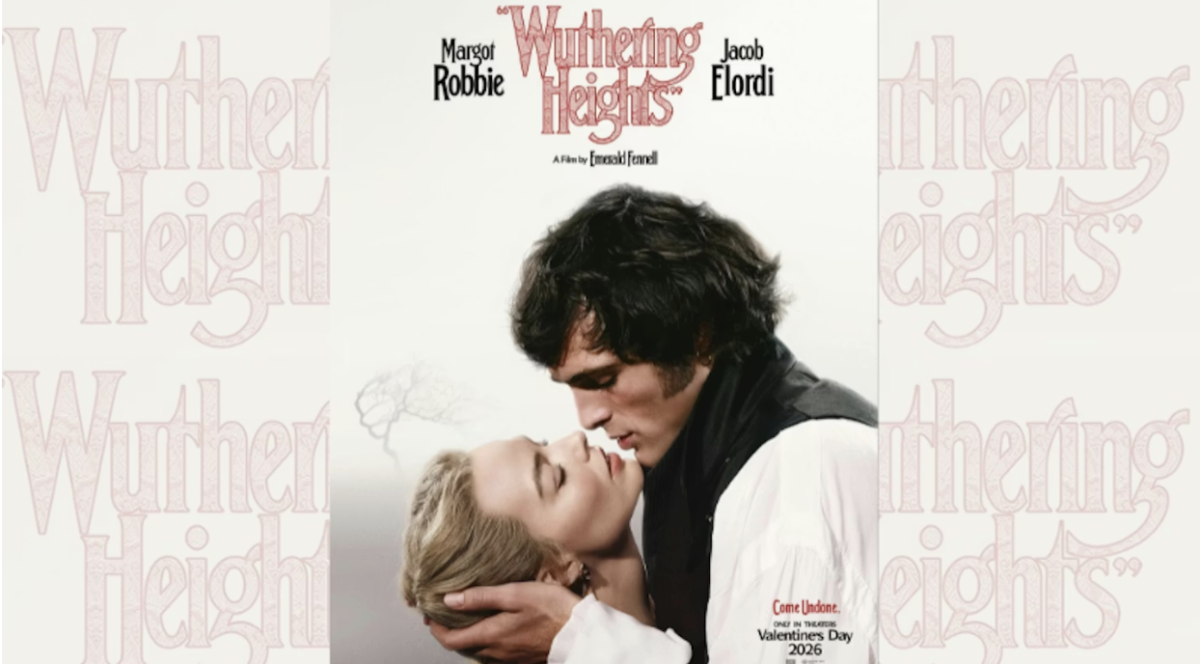
The 21st century is widely regarded as yielding the most progressive generation, with inclusivity and acceptance growing by the years. Yet, white actors are still taking roles that are reserved for people of color. Take Emerald Fennell’s adaptation of the classic “Wuthering Heights” as an example: the character Heathcliff is described as a dark skinned man whose story includes his struggles due to having dark features. As opposed to casting an actor who matched Heathcliff’s description and the significance of his character, the studio in charge cast Jacob Elordi: a white Australian man.
Junior Jayden Soliman, who is aware of this casting, shared her opinion on this choice.
“I think it’s wrong because it takes away from the character’s true identity. I feel like actors are supposed to immerse themselves in the character and represent their life and struggles, and he just can’t do that because he has never faced those struggles and doesn’t have an understanding of them,” Soliman said.
Junior Anjali Mathew, also noted there is a lack of people of color in media.
“I think that there is already a low amount of brown representation in media, and only recently have I been seeing these actors being casted in western media. I think casting a popular white actor in a role meant for a person of color sends a message through the media about these representations, especially when the race is significant to the character,” Mathew said.
Another instance was when Odessa A’zion, a rising star, accepted the role of Zoe Gutierrez for the film adaptation of the novel “Deep Cuts.” The initial support she faced quickly faded into backlash when fans of the book pointed out the character was meant for a Mexican actress, a demographic already not represented much in media. A’zion dropped the role quickly after and announced via Instagram story that she was not aware of this character’s ethnicity, and she would not have taken the role if she had initially known.
“I think actors should do more research on their character prior to accepting the roles to avoid awkward situations like that. I feel like if the character’s development relies a lot on race and their identity they should be cast by someone of their race, but if it’s a story where their race isn’t mentioned, it’s fine,” Soliman said.
Mathew also pointed out the consequences this has on communities of color.
“I feel this limits opportunities and the image of POC actors because it either will cause them to be continuously typecasted or even overwritten in media in general, since it’s these kinds of actions that set the stage for what other movies and stories can do to characters with similar circumstances,” Mathew said.
In a society where representation can already be sparse at moments, many believe the rise of white actors taking roles explicitly meant for people of color is just another step to regressing back to the old ways.
“Overall, I feel that there are many white actors taking over the media, and this really limits representation and the way that each race is viewed. As a kid I always had to look for myself in characters of African or Hispanic descent since I never saw many Indian actors, and even then that was limited. So the fact that even into 2026, there are many children facing the same issue of not being represented because the white actors got the roles instead is insane,” Mathew said.