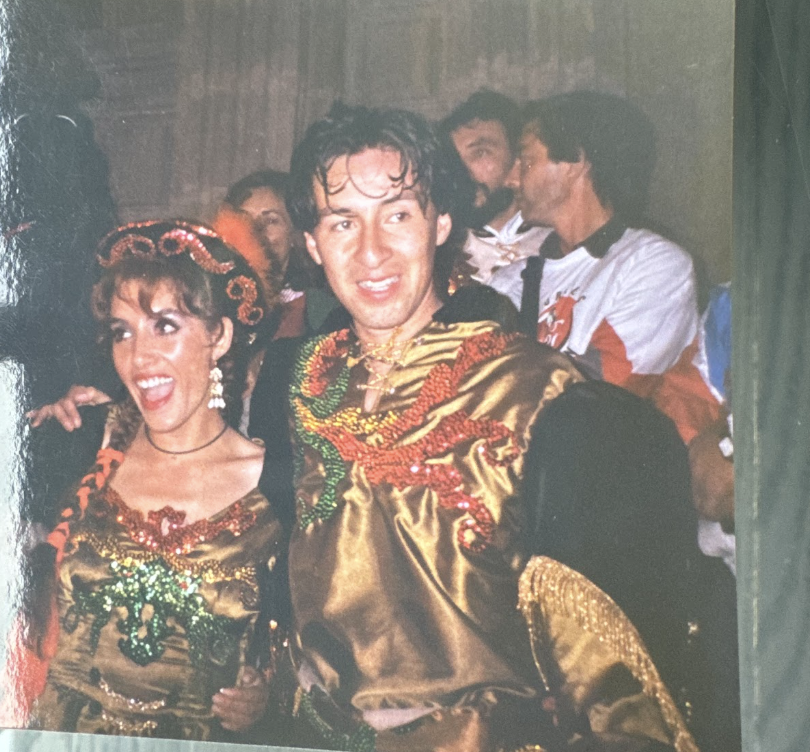
Music blasting from the streets, decorative costumes, and nonstop dancing characterize Carnaval celebrations around the globe. This season of festivities blends culture, religious devotion, and parades. As NVD’s MultiCultural Club (MCC) prepares to celebrate Carnaval (Spanish spelling of “Carnival”) through their events, community members and educators share what makes this celebration meaningful to them.
For Julia Bell, the MCC supervisor and an AP World History teacher, Carnival is a visual sensation rooted in tradition.
“Carnaval looks like bright colors — the colors you see on people’s costumes, parade floats, etc.,” Bell said. She also added that food is a major part of these festivities, describing delicious foods such as Brazil’s pão de queijo, Colombia’s arepas, and other hand-held foods like empanadas.

With foods like these at all celebrations, it’s hard to resist.
Carnaval season is “a total indulgence since you are expected to fast starting the next day,” Bell said. Everyone must enjoy their goods in the days of celebration.
Bell emphasized that the energy in this festival comes from its temporary freedom.
There is a “general craziness and letting loose that people participate in because for the next 40 days you are expected to fast, reflect, and serve,” Bell said.
As a Roman Catholic herself, Bell learned about Carnaval through her own church community, especially the parishioners from Latin America. While her family never formally celebrated, she remembers how they’d have rich meals before the Lenten season, as well as celebrating in her high school Spanish classes.
To Rodrigo Vega, an Ex-Caporales Dancer, Carnaval is something deeply personal and is tied to his identity as a Bolivian immigrant.
For him, it’s his “cultural identity — a big part of my Latino roots,” Vega said. It also “brings back beautiful childhood memories.”
For Vega, the Oruro Carnaval in Bolivia (Carnaval de Oruro) is a celebration and sacred commitment. The Carnaval De Oruro honors the Virgen del Socavón, something so significant that it was recognized by UNESCO back in 2008 as a “Masterpiece of the Oral and Intangible Heritage of Humanity,” Vega said.
He explained that the Carnaval in Oruro, Bolivia, is defined by country-wide participation and intense dancing.
“There are thousands of dancers that are part of fraternities,” where each fraternity represents a city and a dance. These dances include caporales, diablada, and morenada, all of which carry historical themes of “slavery, pagan symbols, and good versus bad,” Vega said.
The celebration lasts a full two days, where each group dances for almost eight hours straight, finishing at the church where they all kneel in respect to the Virgen del Socavón. These fraternities practice for months to sync up moves and to build stamina.
Alejandra Pacheco echoed parallel ideas to those of Vega’s involvement with Carnaval. She said it’s just something people grow up with, especially if Carnaval is celebrated in a nearby city.
As a Bolivian immigrant who“[grew] up in Bolivia, everyone is exposed to Carnaval,” Pacheco said. “At school, you represent these festivities with dance and costumes.”
Like Bell, Pacheco describes the atmosphere as being “colorful, loud, with live music, and lots of people dancing for 8 hours or longer.” After dancing for hours, it’s a “super rewarding experience,” Pacheco said.
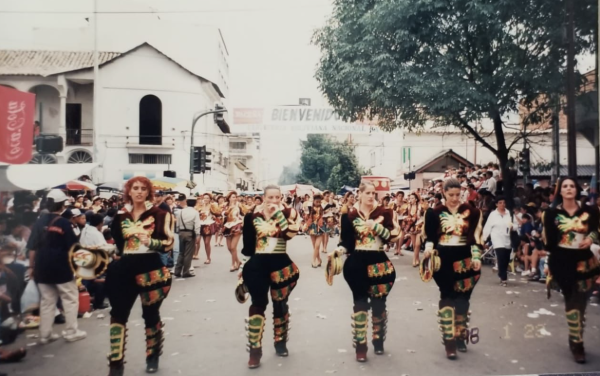
Pacheco and Vega both danced in Caporales San Simón for years when they were in high school, performing at the Oruro Carnaval multiple years in a row.
She described starting in the women’s dance group before moving into the men’s dance line, both very different routines and more notably, costumes.
After being invited to join the women’s line in the male fraternity, she noticed how “their costumes were so cool and fun and more comfortable with pants and boots… and way more challenging.”
Bell, Vega, and Pacheco all emphasized how Carnival is more than a party, but it is about community, culture, and shared experiences.
Bell praised MCC’s efforts to bring these inclusive celebrations to NVD since “there are so many more similarities between people than differences,” Bell said. “I think we can say that we all enjoy partying and being with the people we love.”
Vega agreed. It’s best to at least “show videos of the various Carnival celebrations in the world for students to be aware,” Vega said.
His dancing partner since high school, Pacheco, rounded out their experience nicely and encouraged all to celebrate it at least once in their lifetime:
Carnaval was “the best years of my life.”