
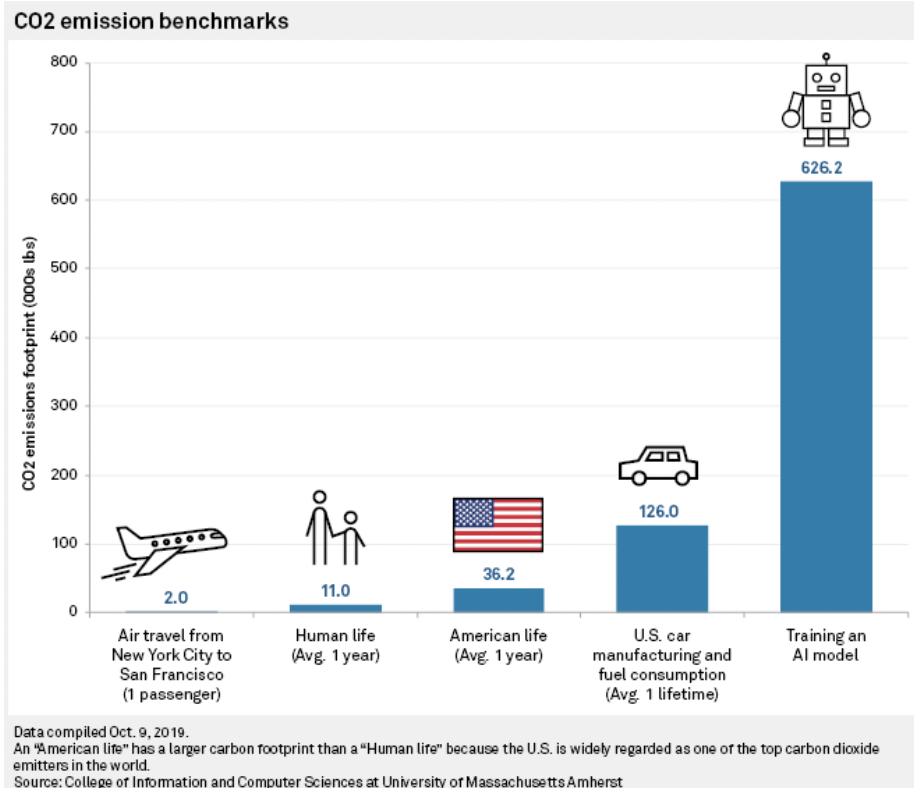
It’s been just over three years since the Generative Artificial Intelligence Chatbot, “ChatGPT,” was released to the public. Whether it’s aiding in school and work, or asking simple daily questions, millions of people worldwide use ChatGPT and other generative AI programs daily. This unbelievably quick dependence on artificial intelligence took the world by storm, causing people to start questioning the logistics. Where does this information come from? Is it safe? But also important, what are the environmental impacts of this new, go-to assistance?
AI databases pull their information from data centers – dedicated physical facilities used to house computing infrastructure like servers, storage, and networking gear. These centers are used to store, process, and distribute large amounts of data.
Data centers require copious amounts of water to cool the extremely hot environments that computers and servers create, aiding in the prevention of overheating that can damage the technology and start electrical fires.
According to Dgtl Infra, “Google’s hyperscale data centers, which support its cloud regions and core products like Gmail, Google Drive, and YouTube, used an average of 550,000 gallons (2.1 million liters) of water daily over the past year [2023]. This amount totals to approximately 200 million gallons (760 million liters) annually,” Mary Zhang said.
Every Google search, short Chat GPT prompt, or quick AI photo creator uses impacting levels of water.
According to scientists at the University of California-Riverside, each time GPT-4 generates a 100-word response, it requires 519 milliliters – a little more than a bottle of water.
Although this may not sound like much, the numbers add up and multiply rapidly.
“[Using Chat-GPT] once weekly for a year by 1 out of 10 working Americans (roughly 16 million people) requires 435,235,476 liters, equal to the water consumed by all Rhode Island households for 1.5 days,” scientists working with The Washington Post said.
Additionally, after being used to cool data centers, contaminated water is discarded and must be disposed of.
As stated by the Environmental and Energy Study Institute, “The large volume of wastewater from data centers may overwhelm existing local facilities, which were not designed to handle such a high volume,” Miguel Yañez-Barnuevo said.
Before GPT was released to the public, coders and technology experts spent years training and molding the program.
“Training GPT-3 has the same water cost as producing 100 pounds of beef, nearly double the amount an average American eats in a year,” scientists with the Washington Post said.
Northern Virginia, home to the largest number of data centers in the country, feels the effects of this water consumption more than ever.
“Northern Virginia consumed close to 2 billion gallons of water in 2023, a 63% increase from 2019,” Yañez-Barnuevo said.
This increase greatly affects the population living there, putting stress on their water systems, which could affect drinking water volume and quality.
The impact of AI on the environment is massive but often overlooked.
“Just because this is called ‘cloud computing’ doesn’t mean the hardware lives in the cloud. Data centers are present in our physical world, and because of their water usage, they have direct and indirect implications for biodiversity,” Computing and Climate Impact Fellow at MIT, Noman Bashir, said.
Sources Used:
https://dgtlinfra.com/data-center-water-usage/
https://www.eesi.org/articles/view/data-centers-and-water-consumption
https://www.washingtonpost.com/technology/2024/09/18/energy-ai-use-electricity-water-data-centers/
https://news.mit.edu/2025/explained-generative-ai-environmental-impact-0117